Case study · Food & nutrition data · Enterprise web app
Nestlé PIM: one trusted source for product and nutrition data
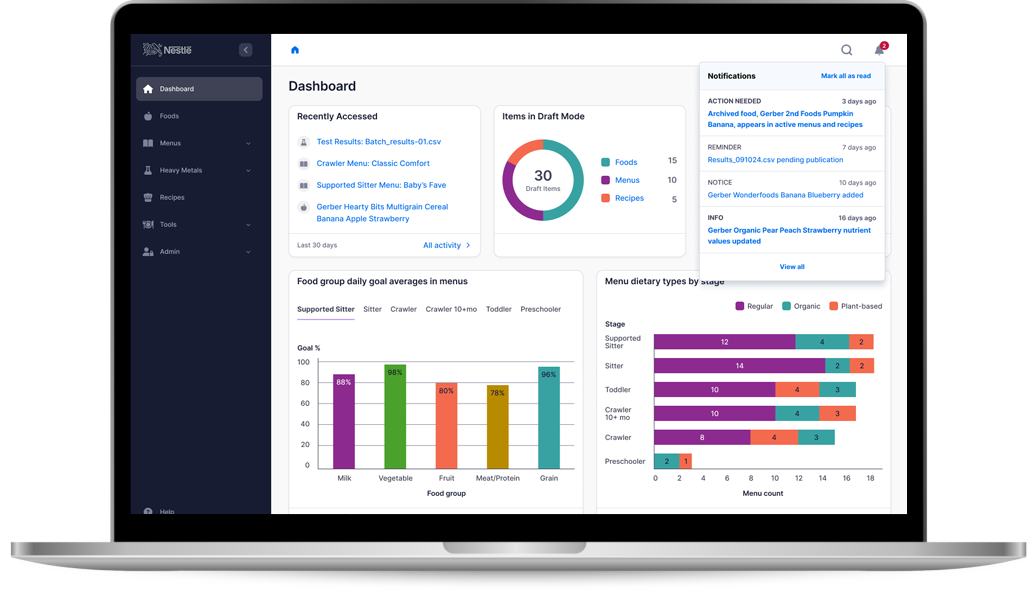
Turning a legacy menu-planning tool into a centralized Product Information Management system, so Nestlé teams can upload, validate and publish product data, including heavy-metal test results, from one place.
Nestlé teams managed product information across several disconnected legacy applications. Test results, nutrition facts and product attributes lived in different places, and keeping them accurate took a lot of manual work.
The stakes are high: this data feeds public websites and has to comply with California’s heavy-metal testing regulations. Our goal was one system where data is easy to upload, check and publish.
Challenge 1
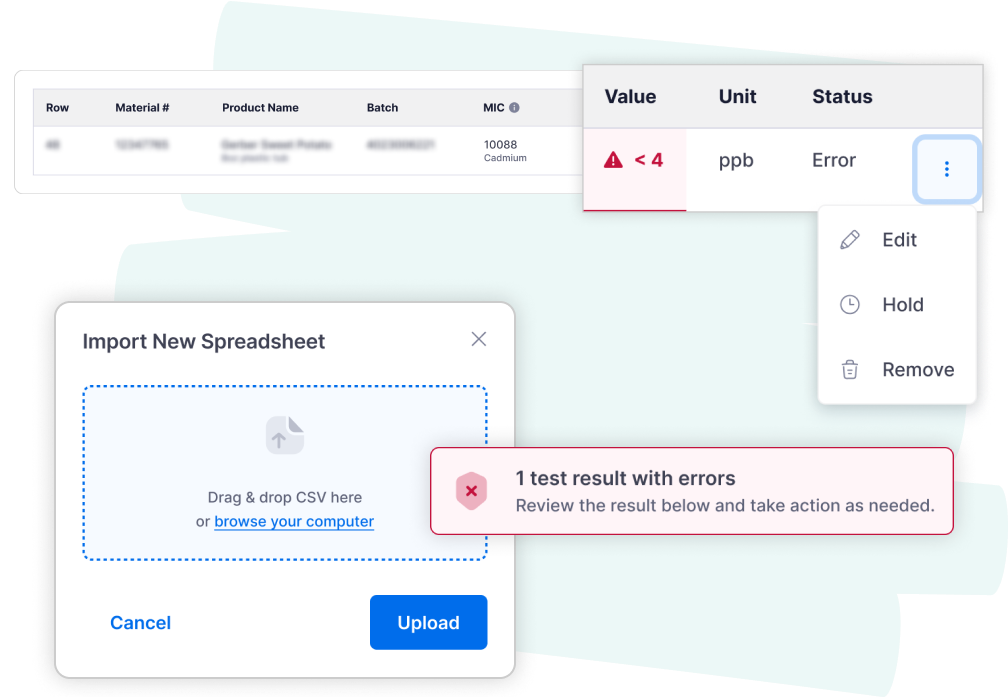
Upload and control test results
Make it simple to upload, validate and manage heavy-metal test result data.
Challenge 2
Open the data through an API
Give external websites secure, reliable access to product data.
Challenge 3
Less manual work
Streamline workflows so teams spend less time on repetitive data tasks.
02 · Research
What we needed to understand first
Users’ needs and pain points
How the existing application was actually used
The criteria test result data has to meet
Long-term needs, to plan for architecture and scale
How we gathered evidence
User interviewsStakeholder interviewsCompetitor & feature research
Looking at real use cases and business rules side by side helped us design for accuracy and compliance from the start.
03 · Key decisions
What we designed, and why
Decision 01
Check the data before it goes live
What we found
Accuracy and compliance depend on catching bad data before it reaches the public.
What we designed
An import flow that checks every uploaded file automatically, separates problem records from clean ones and lets users fix or remove them before publishing to the API. Expired results are archived automatically.
Decision 02
One system, consistent data everywhere
What we found
Product data was spread across several legacy applications, so updates were slow and inconsistent.
What we designed
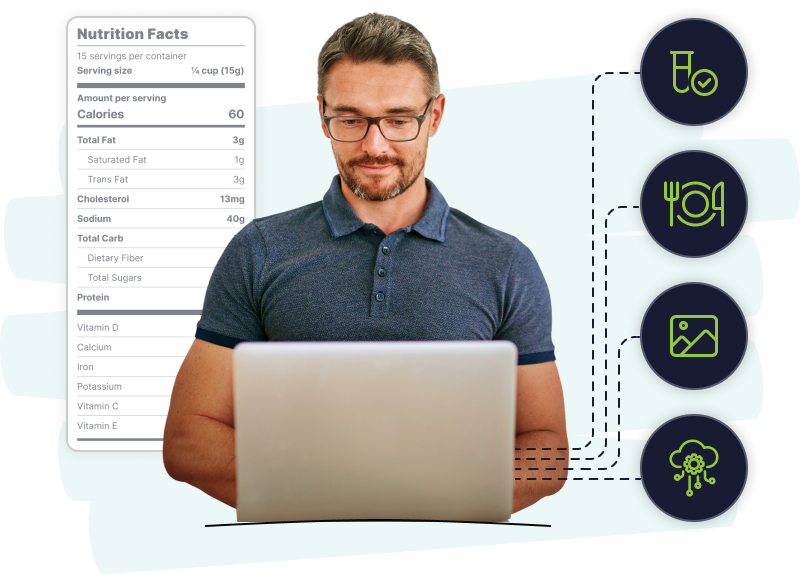
A centralized PIM that replaces the separate tools and feeds public websites through an API, so nutrition data updates everywhere with one click.
Decision 03
Filters instead of reports
What we found
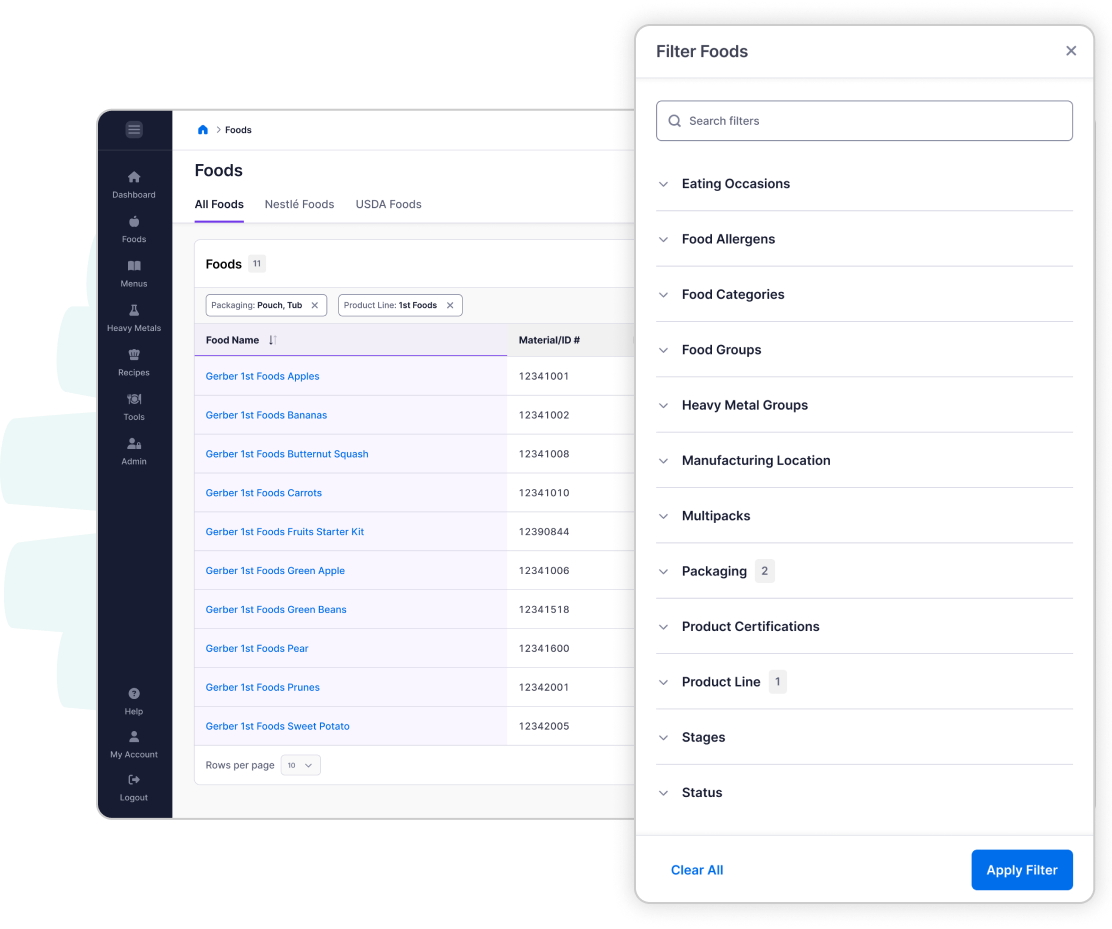
To find products by attribute, users had to run reports, which was slow and not precise enough.
What we designed
A product list with a full set of combinable filters and export options throughout, so users can narrow down products in seconds.
Decision 04
Better tools for healthcare professionals
What we found
Two tools on Gerber Medical Hub, Allergen Finder and Nutrient Profiles, ran on the legacy system and weren’t always up to date.
What we designed
Rebuilt versions powered by the new API, giving healthcare professionals accurate, current product information for patients with specific dietary needs.
04 · Delivery
Reporting built in
The new system includes an intuitive report builder with real-time product information, customizable filters, an easy-to-scan format for comparing results and export for sharing.
The same reporting features power the tools on Gerber Medical Hub, so the experience feels consistent wherever the data appears.
Outcome
A legacy tool turned into a scalable data platform
The new PIM centralizes product data, checks it automatically and publishes it through an API, helping Nestlé meet California’s heavy-metal testing regulations while cutting manual work. It also gives the team a scalable foundation for future features.
1 system
replacing several disconnected legacy applications
Automatic
data checks and archiving, before and after publishing

 A team project at